F-Register
F-Register product manual
Reference for F-Register settings, cooling installations, comfort/process systems, heat pumps, combustion appliances and maintenance.
Manual / reference
How to configure F-Register logically.
This page is a reference for admins, planners and technicians. It starts with the settings tiles and then explains the daily workflow. Vehicles will be added later; for now the focus is cooling installations, comfort/process systems, heat pumps and combustion appliances.
Settings
Explanation per settings tile.
Company details
Enter company name, address, contact details, logo and certificates. These details are used on work orders, reports, labels and audit documents.
Branding
Configure header, side menu, text and F-Register colours. Use reset when a colour combination is not readable enough.
Users and roles
Manage employees, technicians, certificates, permissions and customer portal access. Technicians can update their own account and signature.
Installations
Manage outdoor unit types, indoor unit types, combustion appliances, flue choices and visibility of optional fields.
Refrigerants
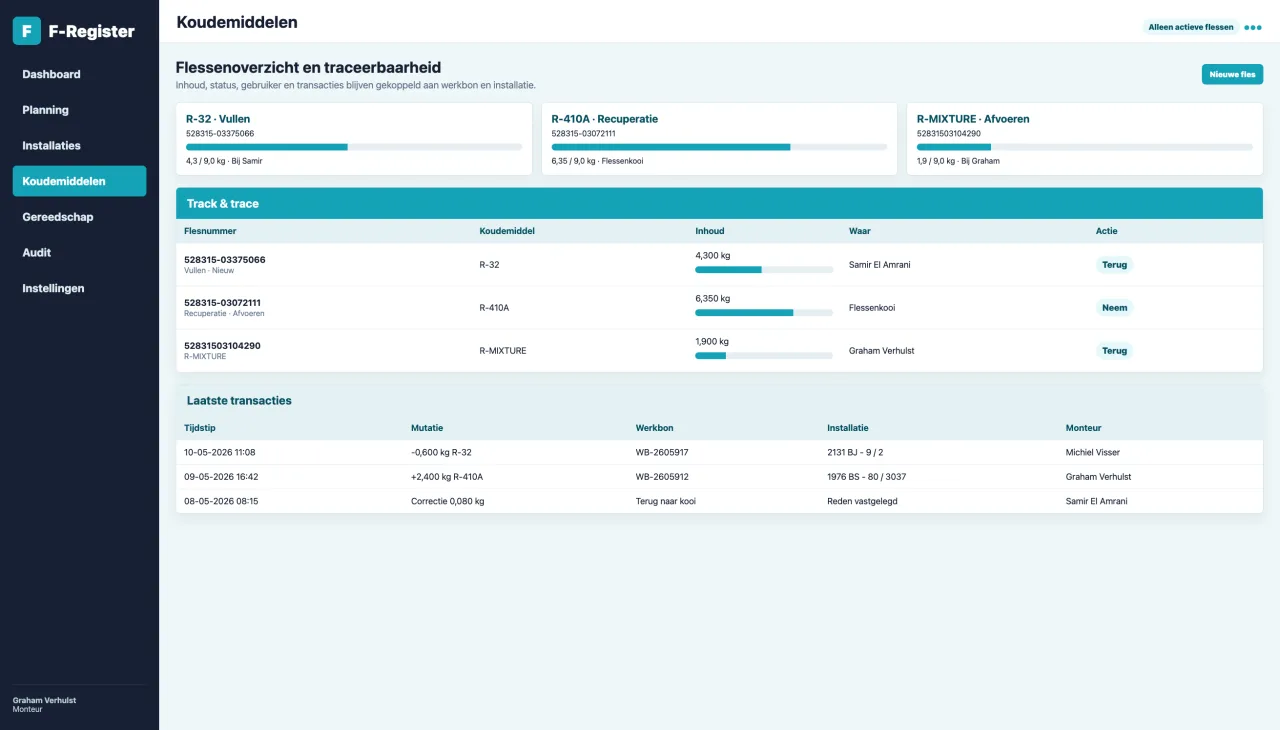
Manage refrigerant types, GWP, classification and cylinders. Cylinders show contents, status, user, transactions, invoices and corrections.
Tools
Register measuring tools with serial number, purchase date, calibration, reports, assigned technician and ATEX or HD/R744 suitability.
Work orders
Configure types, statuses, numbering, report settings, planning and automatic mail rules. Draft work orders stay in the queue.
Maintenance forms
Choose which fields are visible for comfort, process and major maintenance. Fields you do not use stay out of the form and reports.
Combustion appliances
Configure installation fields, maintenance fields and installation actions for BRL 6000-25/K25000, including flue measurements and CO checks.
Documents
Use the document browser for folders, upload, quickview, download and storage limits. System folders remain protected.
Audit
View F-gas balance, leakage loss, tools, certificates, evidence documents and installation audits. Excel export is available per section.
Mail templates
Manage subjects and mail text with placeholders such as work order number, execution date, customer name and portal link.
Cooling / comfort and process
From customer to installation and work order.
- Create the customer or import customer data.
- Add an installation address. For private customers, contact person may stay empty.
- Create the cooling installation or heat pump with brand, type, refrigerant, indoor units and documents.
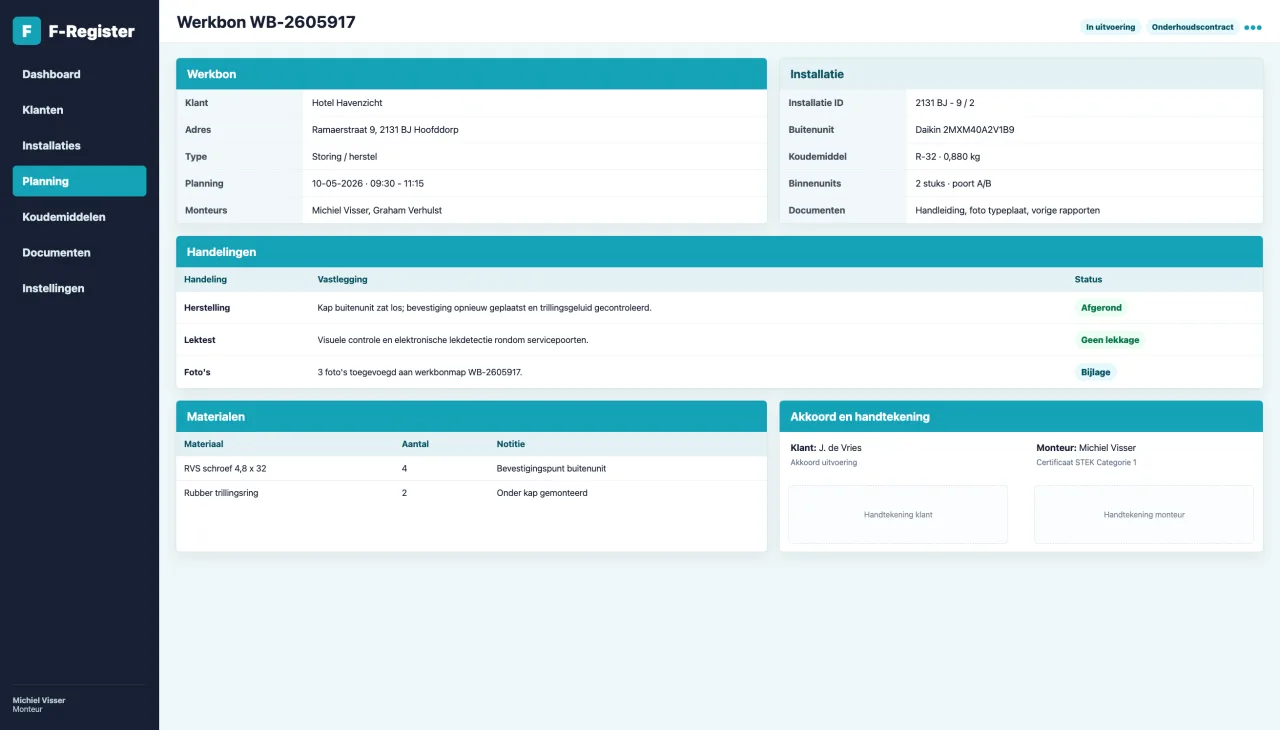
- Create a work order from customer, site or installation. If no installation exists yet, it can be created from the work order.
- Add actions such as maintenance, heat pump commissioning, repair, charging, recovery or dismantling.
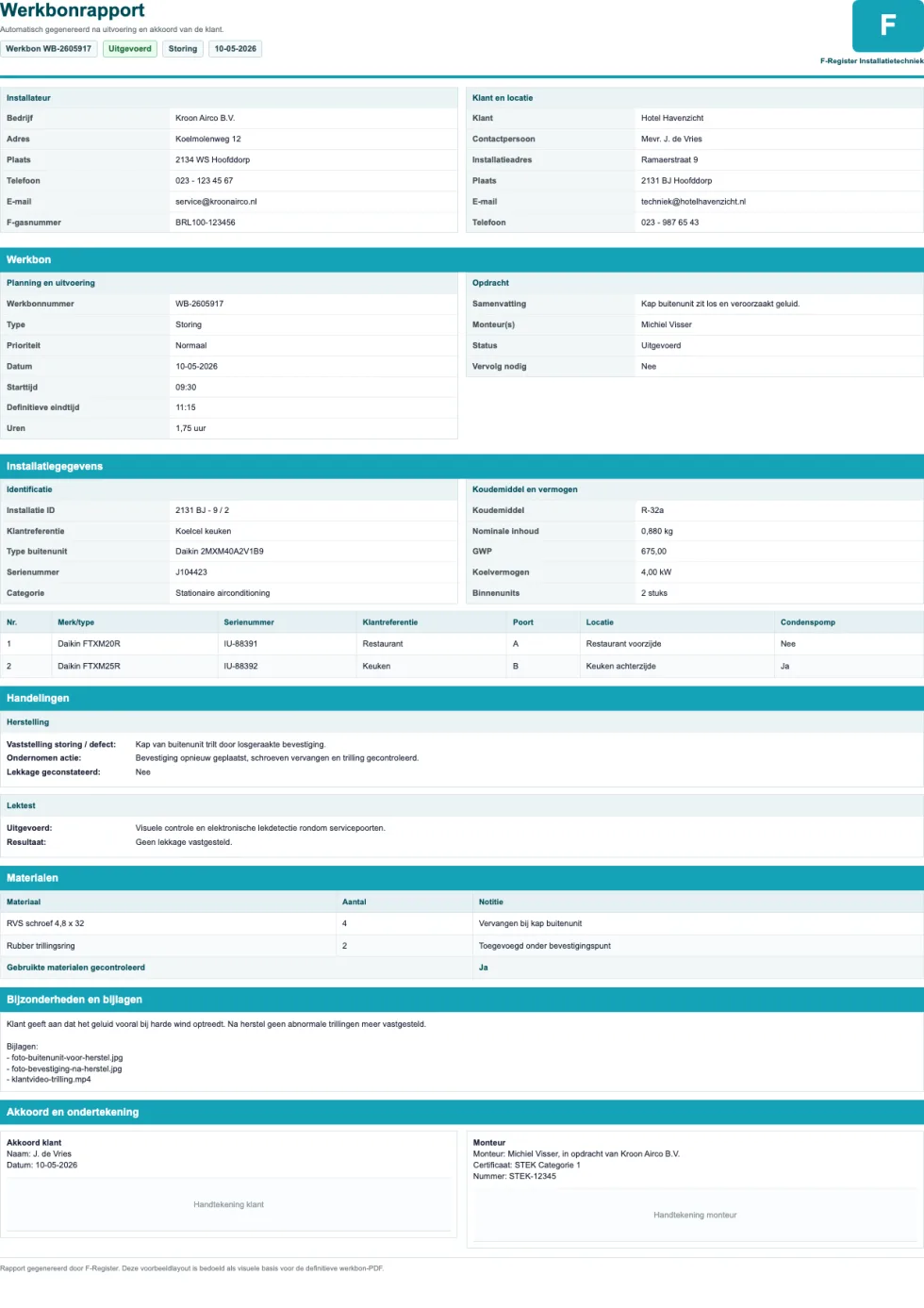
- Capture customer and technician signatures and generate the report.
Combustion appliances
Boiler, flue system and CO check in the same workflow.
- Enable the combustion appliance module from the monitor.
- Configure appliance types and flue choices under settings.
- Add the combustion appliance at the site, optionally linked to a hybrid heat pump.
- Use work orders for installation, maintenance/CO checks and flue inspection.
- Record gas supply pressure, CO, CO2, O2, burner pressure, gaskets and safety checks.
- Generate the report and inspection label for the installation history.
Maintenance
Schedule maintenance from contract, region and time slots.
Installations with maintenance contract appear in the maintenance overview. Planning filters by postcode area and period.
Customers receive an email with available slots. The mail template uses placeholders for date, customer and portal link.
The customer reserves one slot. Changes afterwards go through planning to prevent double bookings.
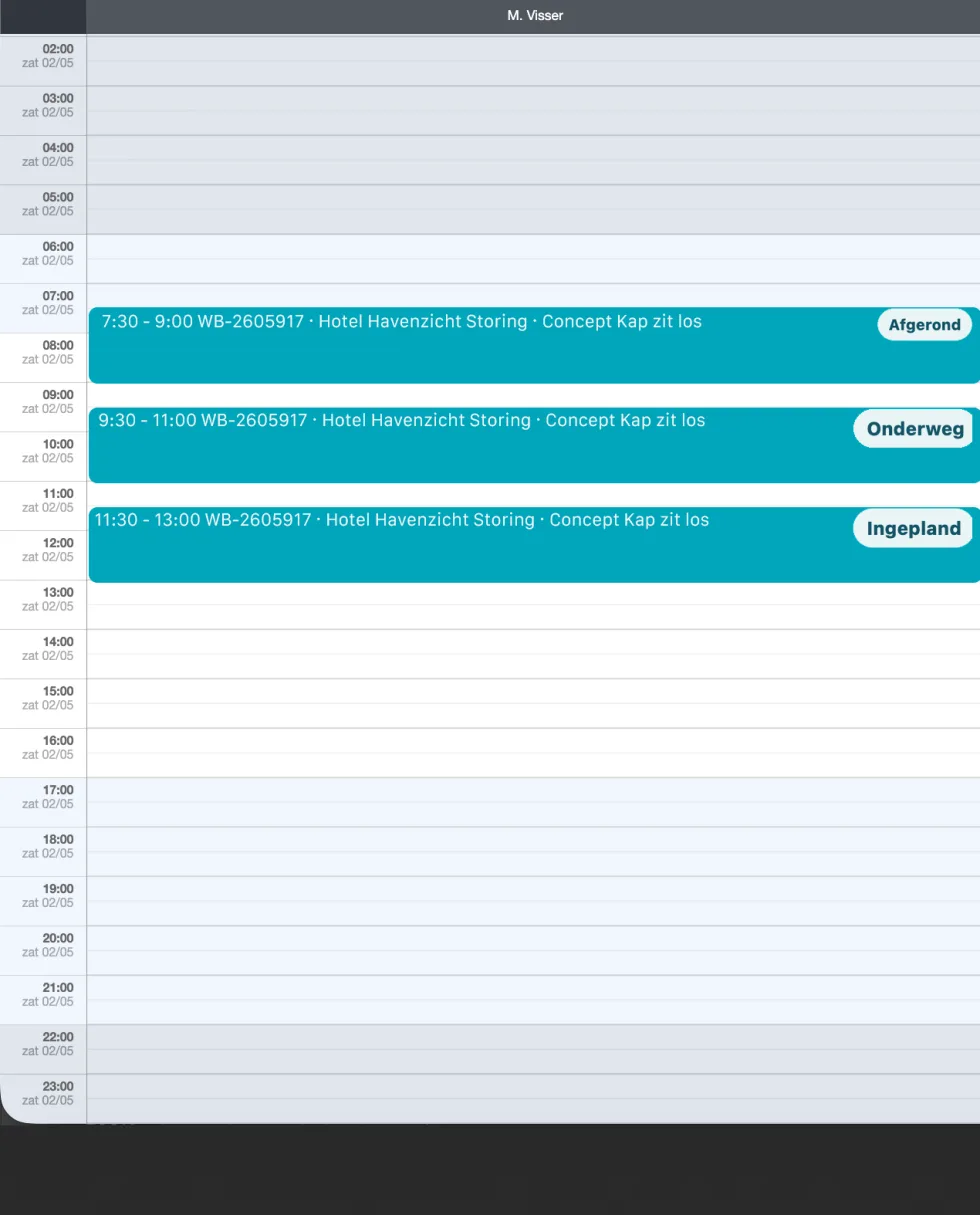
The reserved appointment becomes a work order in the queue with preferred date and time.
Planning assigns a technician. The technician completes maintenance, uploads photos if needed and captures the signature.
Screenshots and video
Examples from the system.